
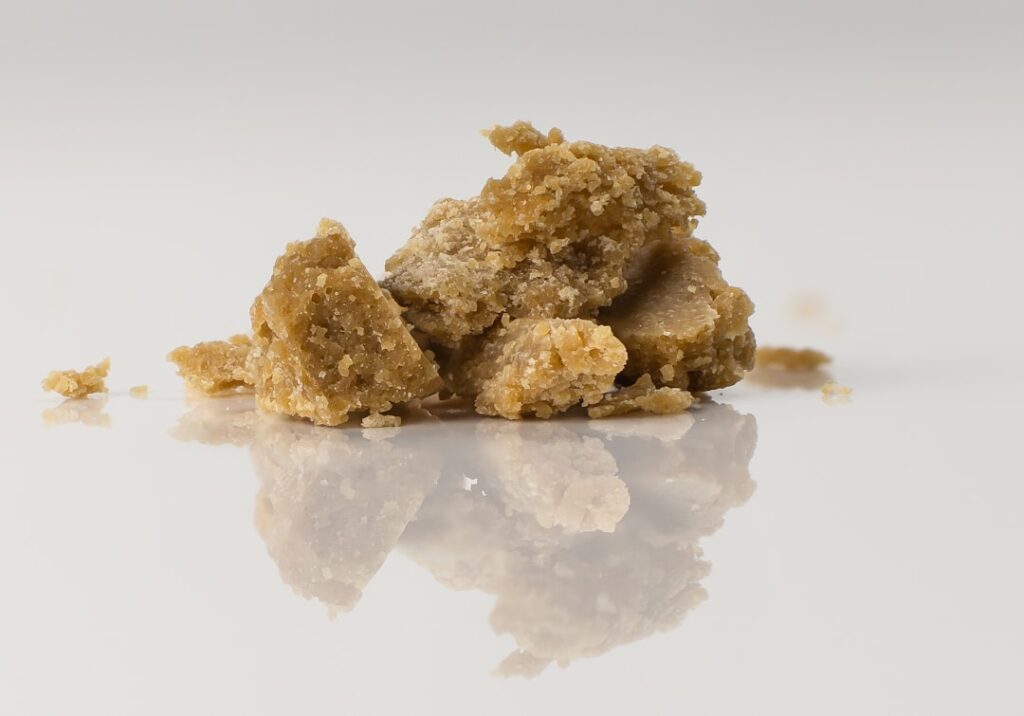
Hashish has been around for thousands of years, compared to most cannabis products. Due to its unique traits, this concentrate is popular amongst many cannabis connoisseurs. Here’s everything you need to know about hashish and why you should consider consuming it.
Understanding Hashish
Hashish, commonly called hash, is a cannabis concentrate made by isolating trichomes from the cannabis plant. Trichomes (resin glands) are responsible for holding cannabinoids, such as THC (tetrahydrocannabinol) and CBD (cannabidiol), as well as flavorants, terpenes, and other compounds. The cannabinoid and terpene profile of the plant determines the unique effects and flavor of cannabis. A typical hash concentrate is a dark brown or golden color, while the consistency is usually solid or crumbly. Like most cannabis concentrates, hash contains high THC content, and it can be more potent than regular cannabis flower.
Hashish products can be made through several methods of collecting and handling resin, resulting in different consistencies. The main hash types and their extraction techniques include:
- Dry sift hash: One of the oldest extraction techniques, using multiple mesh screens to separate trichomes from the cannabis flower. This method is strictly mechanical, and it doesn’t involve a solvent.
- Bubble hash or ice water hash: This type of hash is made by using a solventless method, with water and ice to separate desired plant material from cannabis.
Popular products that can be made from hash:
- Rosin: A pure form of concentrate, made from hash, flower, or kief. It’s made by solventless methods, including high heat and pressure, compared to resin, which is a raw cannabis material.
- Hash Oil: A concentrated hashish product made with a solvent-based extraction process. Hash oil is one of the most potent forms of cannabis products on the market, with over 90% THC levels.
Origins of Hashish
The word hashish came from the Arabic language, meaning grass. Since hashish is an ancient invention, its origin is scattered across many regions, most notably the Middle East, Northern Africa, and India. The biggest distributors of hashish to the Western world were Morocco, Nepal, and Afghanistan.

Effects and Benefits of Hash
The effects of hashish can vary, depending on the chemical profile of the concentrate. Typically, hash offers moderate to high intoxicating effects, relaxation, and euphoria. Hashish products can be used for recreational and medical purposes due to the psychoactive effects and potential therapeutic benefits. Due to its high content of THC, proper dosing should be practiced.
How to Consume Hash
There are several ways to consume hash, depending on the type of concentrate and your consumption preference. Common consumption methods include:
- Smoking: Hash is often smoked in a pipe or bong with flower. It can also be used to enhance bowls or joints for extra potency and flavor.
- Dabbing and vaping: By using an appropriate vaporizer or dab rig, and a torch for the dab rig to heat the hash.
- Edibles: Hash can be added to food and eaten, usually through baked goods. There are also gummies, chocolates, and other forms of hash-infused edibles available on the cannabis market.
Is Hashish Legal?
In the United States, cannabis use is still not legal on a federal level. Each state has its own legal rules and regulations regarding cannabis consumption, including hashish. 40 states legalized medical use, while 24 states legalized recreational use of cannabis products. Before buying and consuming hash, check for local laws.
Hashish has been around for a long time for a reason, predominantly due to its versatility and potency. Hash can offer a rich cannabis experience, both for beginners and seasoned cannabis connoisseurs who want to try something new. Find your nearest dispensary and explore the selection of cannabis products.