
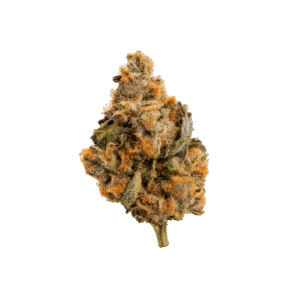
Mango Haze weed strain

Hybrid

Mango Haze

4.8 (247 reviews)

Mango Haze was bred by Mr. Nice Seedbank, the seed company founded by cannabis breeding legend Shantibaba, named after Howard Marks’s memoir and closely tied to the original Haze lineage credited to the Haze Brothers in 60s and 70s California. It’s a three-way cross of Northern Lights #5, Skunk #1, and Haze, stacking three foundational genetic lines into a single tropical-leaning hybrid.

About Mango Haze Strain

Here’s a quick snapshot of the Mango Haze strain:

  • Type: Hybrid (roughly 60% sativa, 40% indica)

  • THC Range: 17%–23%

  • Dominant Terpenes: Myrcene, Pinene, and Caryophyllene

  • Aroma: Ripe mango and tropical fruit, with earthy, spicy Haze undertones

Each parent pulls its own weight here. Haze contributes to the elongated growth, incense-like spice, and long, clear-headed energy the lineage is known for. Skunk #1 adds vigor and a sweeter resin density, and Northern Lights #5 tightens up the structure and speeds up an otherwise long Haze flowering time. 

THC typically runs between 17% and 23%, on the more moderate end for a modern hybrid. Phenotype variation is common with this strain, though, and growers report a spread between mango-forward, spice-forward, and balanced expressions. Two jars labeled Mango Haze can smell noticeably different depending on which phenotype you land on. 

You’ll recognize Mango Haze by its vibrant green buds with an airy, somewhat fluffy structure typical of sativa-dominant genetics, speckled with orange-to-amber pistils and a generous coating of trichomes.

Mango Haze Cultivation Notes

  • Genetics: A sativa-dominant hybrid (often listed 60/40), three-way cross of Northern Lights #5, Skunk #1, and Haze. Haze supplies the elongated structure, high-energy effect, and incense-like spice, while Skunk #1 contributes vigor, resin density, and sweetness — placing it in the same genetic triangle as Super Silver Haze. Moderately challenging to grow, suitable for cultivators with some experience.
  • Climate: Thrives in both indoor and outdoor environments but prefers a warm and humid climate, and thrives in warm outdoor climates that amplify its tropical terpene expression.
  • Growth pattern: Plants can grow tall, requiring some space and support to manage their height and optimize yield — consistent with its Haze lineage stretch, similar to Jack Herer and Durban Poison. Buds are dense and elongated, covered in a generous layer of trichomes.
  • Flowering time: Relatively long at 9-11 weeks, typical for sativa-dominant, Haze-lineage strains (in line with Jack Herer and Sour Diesel’s longer cycles).
  • Yield: Not explicitly quantified across sources — worth confirming with a specific seed bank listing before publishing exact figures.
  • Susceptibility: No unusual susceptibility specifically flagged; standard sativa-lineage precautions (airflow given height and bud density) likely apply.
  • Nutrients: No unusual sensitivity reported.
  • Training techniques: Given the height, standard topping/LST/support staking applies to manage its tall structure, similar to other Haze-lineage strains.
Art piece made up of triangles

Find The Artist Tree
Near You

We have 11 locations in California. Stop in to see what’s new! Plus we offer Daily Deals up to 50% off on top brands.