
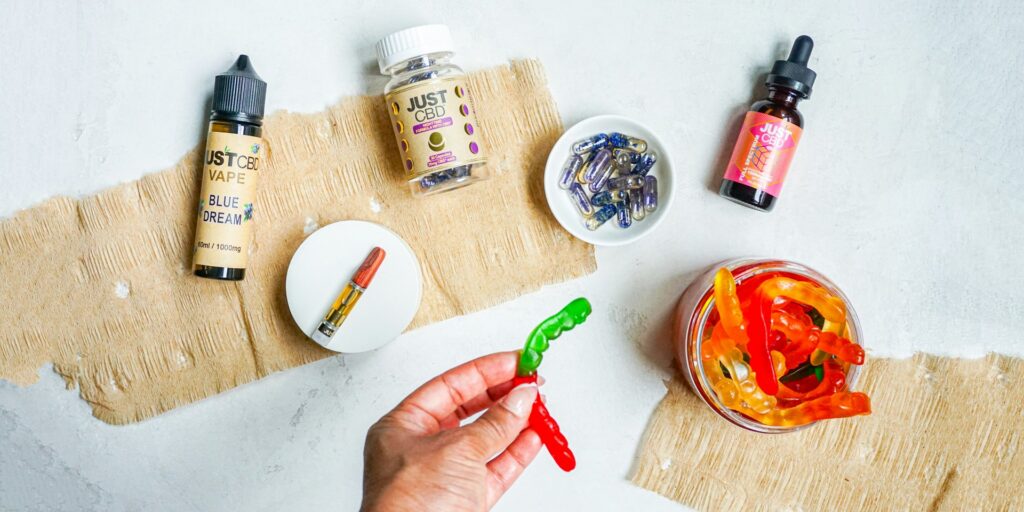
Both tinctures and edibles give you a way to consume cannabis without smoking or vaping. On the surface, they can seem similar enough in the sense that you’re taking something orally as opposed to inhaling it. But they do differ in how they’re used and the experience they produce, and knowing that difference helps you figure out which one makes sense for you.
How Tinctures Work
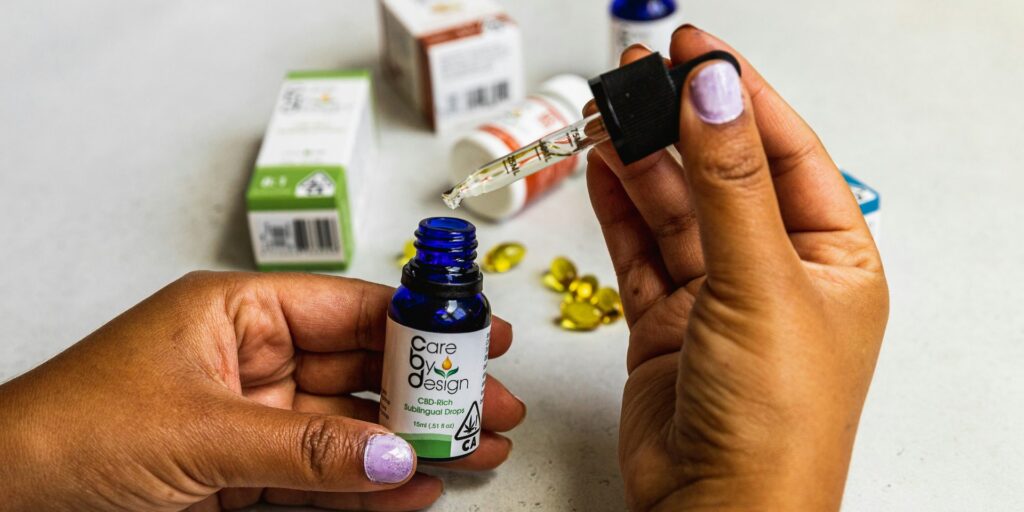
A cannabis tincture is a liquid extract that comes in a small bottle with a dropper. The standard way to use one is sublingually, which means you place drops under your tongue, hold them there for 60 to 90 seconds, and let the tissue absorb the cannabinoids directly into the bloodstream.
That sublingual absorption is what makes tinctures different from edibles. When you hold a tincture under your tongue, it largely bypasses the digestive system and liver, going straight into the bloodstream through the mucous membrane.
Key things to know about how tinctures work:
- Onset: 15 to 45 minutes when taken sublingually
- Duration: Typically 2 to 4 hours
- Absorption: Directly through the mucous membrane, bypassing the liver
- Dosing: Fully adjustable drop by drop
You can also swallow a tincture or add it to food or drink, but at that point it gets processed through digestion like an edible would, which means slower onset and longer duration. Most people who use tinctures regularly stick to sublingual precisely because of the faster, more controllable timeline.
How Edibles Work
Edibles like gummies, chocolates, capsules, and beverages are consumed and processed through the digestive system. From there, THC passes through the liver, where it gets converted into 11-hydroxy-THC, a compound that crosses the blood-brain barrier more efficiently than regular THC, which is why it tends to produce a stronger, more full-body effect.
Key things to know about how edibles work:
- Onset: 30 minutes to 2 hours, depending on metabolism and food intake
- Duration: 4 to 8 hours, sometimes longer at higher doses
- Absorption: Through digestion and liver processing
- Dosing: Fixed per piece; less flexible than tinctures, but consistent
The extended duration and the nature of 11-hydroxy-THC make the edible experience a completely different ballgame from other consumption methods. Many people describe it as more physical, more sedating, and more intense, even at equivalent doses to what they’d use with a tincture or inhaled cannabis.
THC Tinctures vs. Edibles: The Breakdown
Here are the main differences between the two, broken down and stacked side by side.
| Tinctures | Edibles | |
|---|---|---|
| Onset time | 15–45 minutes (sublingual) | 30 minutes–2 hours |
| Duration | 2–4 hours | 4–8 hours |
| How THC is absorbed | Directly through mucous membrane (sublingual) | Through digestion and liver processing |
| Intensity | More moderate and controllable | Often stronger due to 11-hydroxy-THC conversion |
| Dosing flexibility | High, since you control each drop | Fixed per piece or serving |
| Taste | Mild to neutral, depends on the product | Varies widely since it’s usually masked by food flavors |
| Best for | Faster onset, precise dosing, daytime use | Longer-lasting effects, nighttime use, full-body experience |
Dosing Differences Between THC Tinctures and Edibles
This is one of the most practical differences between the two. Tinctures give you granular control because the dropper lets you measure out exactly how much you’re taking and adjust in small increments. If 5mg isn’t quite right, going to 7.5mg is pretty easy.
That level of precision makes tinctures popular with people who are dialing in a specific dose or who want to microdose throughout the day.
Edibles come in fixed servings. A 10mg gummy is a 10mg gummy. You can cut it in half, but you’re working with set increments rather than a continuous scale. For many people, that’s fine, but it does make fine-tuning a little less flexible.
With both, starting low and working your way up is always the best way to go. The difference is that with tinctures, you’ll have a clearer sense of the effect within an hour. With edibles, you need to give it the full 2 hours before drawing any conclusions about whether the dose is right.
Nano-Emulsified Cannabis Edibles
A growing category of edibles uses nano-emulsification technology, which breaks THC into much smaller particles to speed up absorption. These products, often beverages or specific gummy formulas, can kick in within 15 to 20 minutes, which brings them much closer to tincture onset times. If faster onset is your main reason for leaning toward tinctures, it may also be good to check if any of the edibles on the shelf use this technology.
Which One Should You Choose?
There’s no universal answer here. Different strokes for different folks, as they say. But there are a few questions that can help point you in the right direction and help you choose:
- Do you want faster, more predictable onset? Tinctures are the better fit. The sublingual method is as close to real-time feedback as you can get with an oral product.
- Do you want longer-lasting effects? Edibles win here. If you’re looking for something that carries you through a full evening or helps you sleep through the night, the extended duration of an edible is an advantage.
- Do you want precise control over your dose? Tinctures give you more flexibility to fine-tune than pre-dosed edibles.
- Are you new to cannabis? Either works as a starting point, but tinctures may be more forgiving simply because the feedback loop is faster, and you’ll know sooner whether you’ve taken too little or too much.
- Do you prefer a specific format? Some people just don’t like the taste or experience of tinctures, or they’d rather eat a gummy than deal with a dropper. That’s a completely valid reason to go with edibles.
Find the Right Cannabis Products at The Artist Tree
Whichever way you decide to go, the best starting point is usually a conversation with someone who knows the products well. So, stop by your nearest Artist Tree location, and our guides will walk you through the options we carry, help you figure out a starting dose, and point you toward something that fits what you’re looking for.