
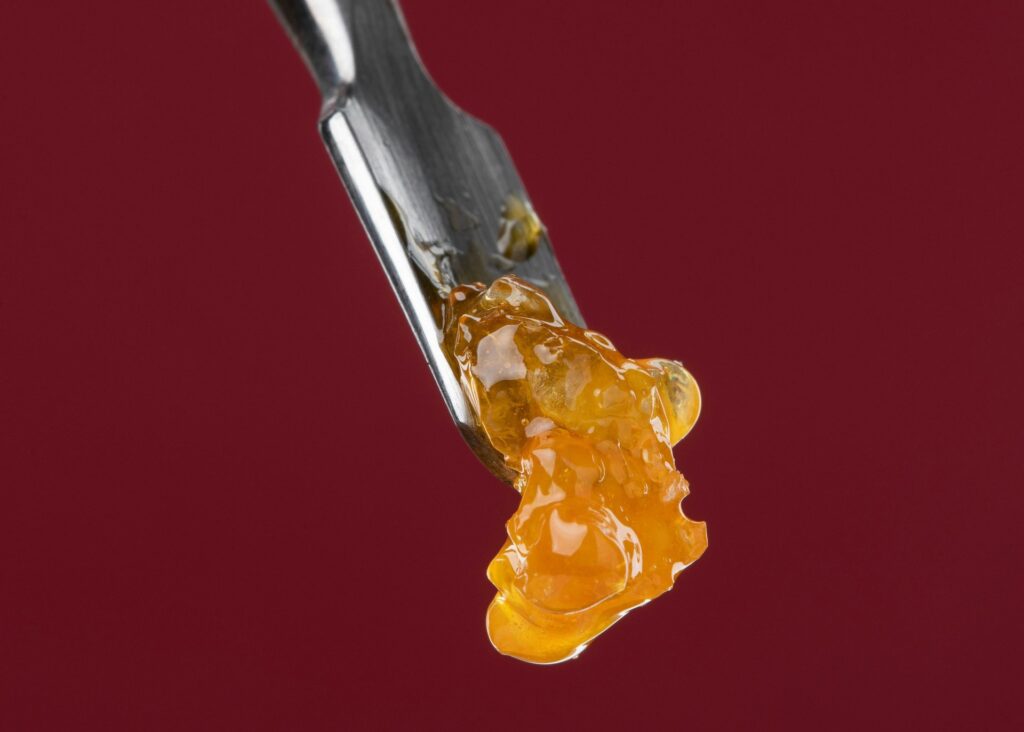
If you’ve only ever smoked flower, concentrates can feel like a different category of product, and in a lot of ways, they are. The potency is higher, the formats are more varied, and the terminology can confuse you. Shatter, wax, rosin, live resin, badder, diamonds (and more!)—that’s a lot to sort through without a map. So, here’s one.
What Are Cannabis Concentrates?
Concentrates are cannabis extracts made by removing the plant material and keeping only the cannabinoids and terpenes in a much smaller, far more potent form. Where high-quality flower might test at 25–30% THC, concentrates commonly range from 60% to 90%+ depending on the type and process, and that is the main reason why people use them.
A smaller amount goes further, the onset is typically faster than flower (especially when dabbed), and the flavor can be more expressive, especially with solventless and live options that preserve the plant’s terpene profile more completely.
Getting there requires extraction, and the extraction method is the biggest factor in what kind of concentrate you end up with.
Solvent-Based vs. Solventless
The key difference between concentrates lies in the extraction method:
- Solvent-based extraction: Done with a chemical solvent (most commonly butane, propane, CO2, or ethanol) to strip cannabinoids and terpenes from the plant material. The solvent is then removed through purging, leaving behind the concentrated extract. Done properly, solvent-based concentrates are safe and clean. Done poorly, residual solvents can remain in the final product, which is why third-party lab testing matters.
- Solventless extraction: Uses only heat, pressure, water, or some combination of those to separate the extract from the plant. Because there are no chemicals involved, solventless concentrates are generally considered the cleanest option and tend to carry a premium price that reflects both the purity and the more labor-intensive production process.
The extraction method is not a matter of what’s better or worse. It’s more of a personal preference type of thing, but it’s good to know the difference when you’re reading a label or deciding what to spend your money on.
Types of Cannabis Concentrates
Extraction method, starting material, and how the extract is processed after the fact are some of the key differences between types of concentrates. Here’s a breakdown of the main types you’ll find on our shelves:
- Shatter: Brittle, glass-like, high THC, low terpenes
- Wax and Badder: Soft and creamy, easier to handle, moderate terpene content
- Sugar: Grainy texture, strong flavor, THCA crystallization
- Live Resin: Fresh-frozen starting material, full terpene profile
- Sauce: Terpene-rich liquid, often with THCA diamonds
- THCA Diamonds: Near-pure THCA crystals, extremely potent
- Rosin: Solventless, heat and pressure only, clean and flavorful
- Live Rosin: Solventless + fresh-frozen, the premium tier
- Bubble Hash: Ice water extraction, one of the oldest concentrate forms
Shatter
Shatter is a brittle, glass-like concentrate that gets its name from the way it breaks. It’s typically produced using butane hash oil (BHO) extraction and has a translucent amber appearance. Shatter tends to be high in THC and relatively shelf-stable because of its low moisture content, but it’s also one of the more heavily processed concentrate types because the refining process that gives it that clean, glassy look also strips out much of the terpene content.
It’s less common on shelves than it used to be, largely because newer concentrate types preserve more flavor.
Wax and Badder
Wax and badder (sometimes called batter or budder) are also BHO-based, but they go through a different post-extraction process called whipping or agitation that gives them a softer, creamier consistency. Badder is typically easier to handle than shatter and has a slightly more developed terpene profile. It’s one of the most common concentrate formats you’ll see at a dispensary.
Sugar
Sugar concentrate has a wet, granular texture that resembles raw sugar or wet sand. It forms when THCA crystallizes slightly during or after extraction, creating that characteristic gritty consistency. Sugar tends to have a strong terpene content alongside those THCA crystals, which makes it a flavorful option relative to other BHO-based types.
Live Resin
Live resin is where the story starts to get more interesting. Unlike concentrates made from dried and cured flower, live resin uses fresh-frozen plant material, which means the plant is harvested and immediately frozen to preserve the terpene profile before it has a chance to degrade.
That’s a big selling point because terpenes begin breaking down almost as soon as the plant is cut, and the drying and curing process accelerates that. By freezing the plant immediately after harvest, live resin captures the aromatic complexity of the living plant far better than conventional extraction can.
Live resin comes in several textures (sauce, sugar, badder) depending on how it’s processed after extraction. What they all share is a more complete, strain-specific terpene profile and effects that many consumers describe as more nuanced than conventional BHO concentrates.
Sauce
Sauce is a high-terpene concentrate with a liquid, syrupy consistency, often containing chunks of THCA diamonds in a terpene-rich liquid. It’s typically made from live resin, which gives it an exceptionally expressive flavor profile. The ratio of diamonds to sauce varies by product, so some are mostly liquid, while others are diamond-heavy.
Diamonds (THCA Crystalline)
THCA diamonds are crystalline structures of nearly pure THCA that form when certain concentrate extracts are left to separate over time. They can reach purities of 99%+ THCA, which converts to THC when heated. On their own, diamonds have very little terpene content because they’re essentially isolated cannabinoids. That’s why they’re often sold in sauce (the diamonds-in-sauce format) to pair the potency of the crystals with the terpenes of the liquid.
Rosin
Rosin is produced by applying heat and pressure to cannabis material (flower, hash, or kief) to squeeze out the oil mechanically and without any solvents, making rosin a solventless concentrate that retains the plant’s full cannabinoid and terpene profile without any chemical processing.
The two main types of rosin are:
- Hash rosin: Considered the premium version, hash rosin is pressed from bubble hash (ice water hash) instead of directly from flower. It’s more refined, vapes more smoothly, and has a cleaner flavor profile than flower rosin.
- Live rosin: Starts from fresh-frozen material (like live resin) before being pressed into rosin. The combination of solventless extraction and fresh-frozen starting material produces the most complete, terpene-rich, and flavorful concentrate available (and the most expensive).
Hash and Bubble Hash
Hash is one of the oldest forms of cannabis concentrate. Traditional hash is made by separating and compressing the trichomes from cannabis plant material into a block or pressed form.
Modern bubble hash (also called ice water hash) uses ice, water, and agitation to separate trichomes from plant material, then filters the result through a series of mesh screens into what’s graded by micron size. Higher-quality bubble hash (full melt or near-full melt) can be pressed into rosin or consumed directly.
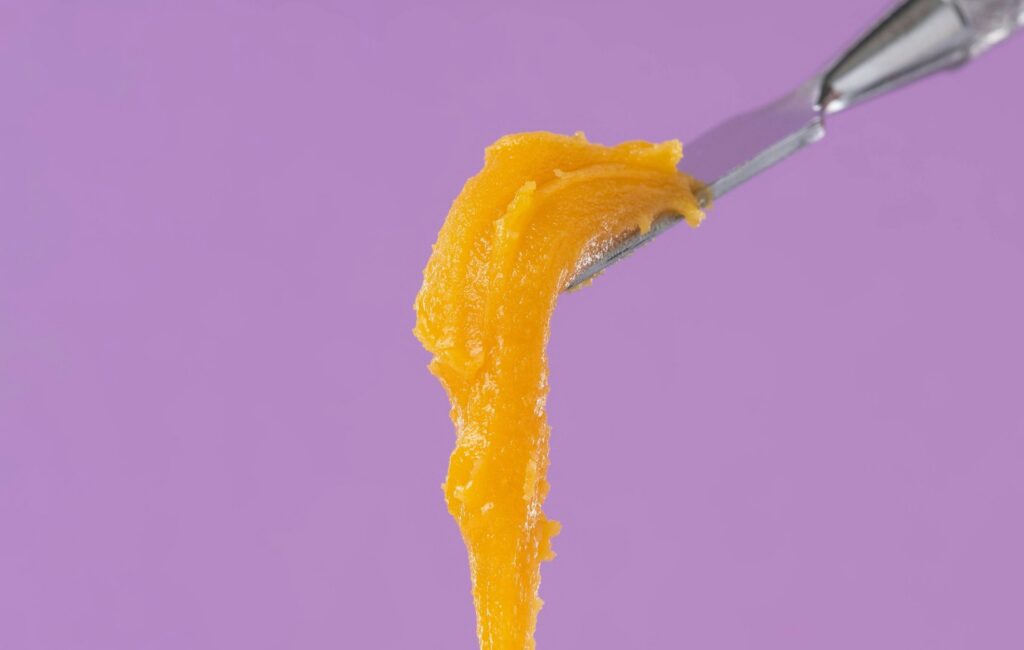
Ways to Consume Cannabis Concentrates
Your setup, your experience level, and what you’re prioritizing (convenience, flavor, or potency) all point toward different methods to consume concentrates. Here are your options:
- Dabbing: The most common method for consuming concentrates. It involves a dab rig (a water pipe with a heated nail or banger) onto which a small amount of concentrate is applied. The heat vaporizes the concentrate, and the vapor is inhaled. Temperature control matters here because too hot can burn off terpenes and give a harsh hit, and too low doesn’t fully vaporize the concentrate. E-nails and electronic dab rigs make temperature control easier.
- Vape cartridges and disposables: The most accessible way to consume concentrates without any equipment. Most carts are filled with distillate, but live resin and live rosin carts are widely available at a premium.
- Adding to flower: Sprinkling concentrate on top of a bowl or incorporating it into a joint is an easy way to boost potency without buying a rig.
- Cold-start dabbing: A technique where the concentrate is placed in a cold banger before heating, giving you more control over the temperature and producing a more flavorful, lower-temperature hit.
Things to Know Before You Start
Concentrates hit harder and faster than flower, and there’s no benefit to overdoing the first session. If you’re new to them, starting with a small amount (a piece the size of a grain of rice is enough for a first try) and going from there is the right approach.
The other thing is that quality matters more with concentrates than with almost any other format. A well-made rosin from premium starting material and a poorly made distillate are both concentrates, but they’re not remotely comparable experiences. That’s why it’s always best to buy at licensed dispensaries and to buy products with third-party lab results confirming potency and the absence of residual solvents.
Explore Concentrates at The Artist Tree
The concentrate section of a dispensary is the one that tends to confuse people the most. That’s why we have our guides! Drop by your nearest dispensary location, and they can walk you through what’s on the shelf, explain the differences between formats and extraction methods, and help you find a starting point that meets you where you are.