
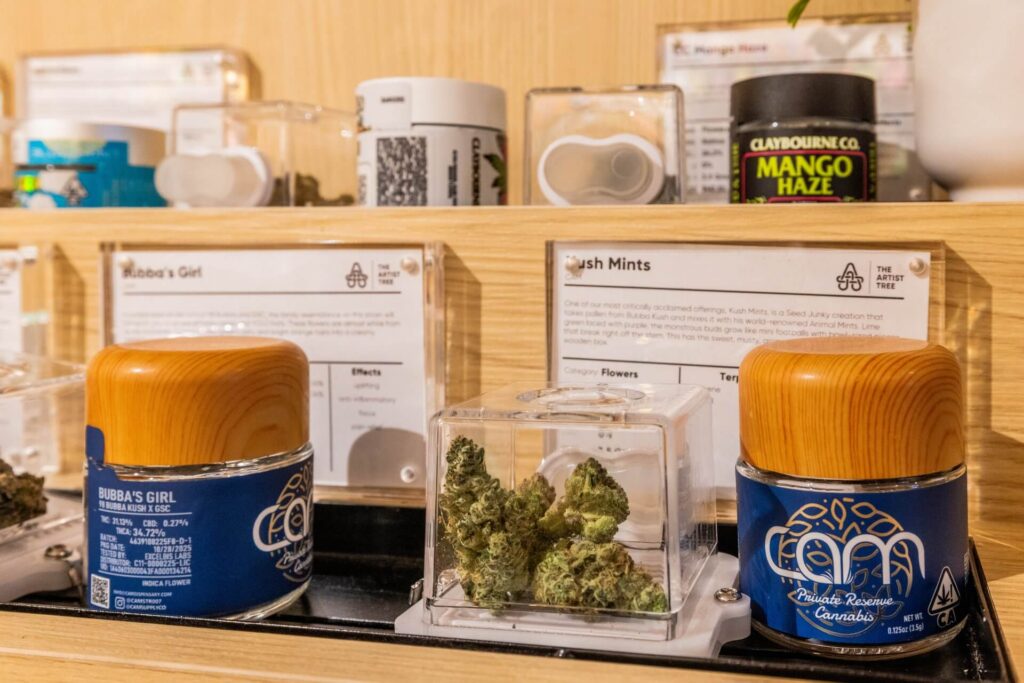
Walking into a dispensary these days can feel overwhelming. Cannabis labels are supposed to inform, yet oftentimes, they leave us feeling confused instead. But once you know what to look for, those numbers, symbols, and terms can help you have a more personalized experience.
Why Cannabis Product Label Matters
Cannabis labels are there to protect you. They tell you what’s in the product, how strong it is, where it came from, and how to use it safely. Knowing how to read cannabis product labels helps you understand potency, anticipate effects, and choose products that fit with your preferences.
Key Medical Cannabis Labels
Cannabis labels may look packed with information and leave you confused. When you know what to look for, it becomes easy. Here’s a breakdown of the most important things to look for on a product sticker:
- Potency: Total THC and CBD levels tell you how strong the product is.
- Product type: Shows the form of the product if not obvious.
- Strain and terpene profiles: Names the strain the product was made of (indica, sativa, or hybrid) and lists the terpene profile.
- Dosage: Outlines the recommended serving size and the total cannabinoid content.
- Compliance and safety warnings: Includes legal information and safety recommendations.
Besides these, you’ll also find a full list of ingredients, including common allergens and additives.
How to Read Cannabis Product Labels for Potency
Cannabis product labels list the content of Tetrahydrocannabinol (THC) and Cannabidiol (CBD), but they list two separate numbers for each: THC and Total THC, and CBD and Total CBD. The difference between THC and Total THC lies in their activity status, and the same is true for CBD and Total CBD.
- THC: The psychoactive compound present in the cannabis plant in its raw, acidic form (Tetrahydrocannabinolic acid (THCA)). To produce the effect (the “high”), it needs to go through a process called decarboxylation, which usually happens when cannabis is heated via smoking, vaping, or baking into edibles.
- Total THC: The number that represents the maximum psychoactive potential after full decarboxylation, and the one you want to focus on.
- CBD: The raw compound that needs to go through decarboxylation to produce effects, much like THC.
- Total CBD: The amount of active CBD present after decarboxylation. This is the compound that is associated with the non-intoxicating, relaxing effects.
How potent a marijuana product is will also depend on the type of product itself because different products carry different potency levels.
The Role Product Type Plays
The product type tells you more than just what’s inside the packaging (if that wasn’t obvious). It shapes your entire marijuana experience because different formats mean different onset times, duration, and potency.
- Flower: Dried and cured cannabis buds, typically vaporized or smoked. Potency ranges from 10–30% Total THC, with today’s average sitting around 15%. Effects onset within minutes and last 1–3 hours on average.
- Pre-rolls: Ready-to-use joints filled with ground flower. Same potency range as flower, just with no prep required.
- Edibles: Gummies, chocolates, beverages, and others are a smoke-free option with a delayed onset of 30 minutes to 2 hours and effects that can last 4–12 hours. Potency is measured in milligrams per serving.
- Vaporizer cartridges: Discreet and fast-acting concentrated cannabis oil in cartridge form, with potency typically ranging from 30–80%+ THC.
- Concentrates: Wax, shatter, rosin, and oils. Highest potency category, often exceeding 80% THC.
- Tinctures: Liquid extracts taken under the tongue or mixed into food and drinks. Faster onset than edibles, with potency measured in milligrams per milliliter.
- Topicals: Creams, balms, and patches applied directly to the skin and used strictly for localized relief.
Potency ranges also vary significantly across product types, so knowing what you’re buying helps you dose correctly from the start.
Strain and Terpene Profiles on Dispensary Labels
Each marijuana label will consist of a strain name (like OG Kush, Gelato, or Blue Dream), which identifies the specific genetic variety of the plant. You’ll also see one of the three strain classifications:
- Indica: Traditionally associated with relaxing and sedative properties, and used for winding down in the evening or managing physical discomfort.
- Sativa: Usually connected with uplifting, cerebral effects and used for creative activities and in social settings.
- Hybrid: A cross between the two, with effects that vary depending on the specific cultivar’s cannabinoid and terpene makeup.
These classifications are good starting points, but modern cannabis research suggests that the Indica/Sativa distinction is more of a guideline than a guarantee. These days, the terpene profiles are a more reliable predictor of effect than the strain classification alone.
Terpenes are the aromatic compounds responsible for each strain’s distinct smell and flavor, and they also influence how the cannabinoids interact with your body. Common ones to look for include:
- Myrcene: Associated with relaxing properties
- Limonene: Linked with uplifting effects
- Pinene: Used for focus and alertness
Individual body chemistry, tolerance, consumption method, and the product’s full chemical profile all play a significant role in shaping the overall experience.
Decoding the Numbers on Cannabis Packaging
Different products depict cannabinoid content in different ways on custom labels. Here are the common units of measurement you’ll find:
- Percentage (%): The standard for flower. Tells you the cannabinoid content as a share of total weight. 30% THC means 300mg of THC per gram of flower.
- Milligrams per gram (mg/g): An alternative way to express the same thing for flower. To convert to a percentage, just move the decimal one place to the left, and 300 mg/g becomes 30% THC.
- Miligrams per serving (mg/serving): The standard format for edibles. Tells you how much THC or CBD is in a single dose.
- Milligrams per package (mg/package): The total cannabinoid content across the entire product. Always divide this by the number of servings to get your per-dose amount.
Paying attention to dosages is especially important with edibles because they have a slower onset, but a longer, more intense experience overall.
Safety and Compliance Labels
Safety and compliance information aren’t just legal formalities. They’re how you verify that a cannabis product has moved through the regulated supply chain and been tested before reaching the shelf.
The most important thing to look for is the QR code. Scan it, and it’ll take you to the product’s full Certificate of Analysis (COA), the official third-party lab report confirming what’s actually in the product.
You’ll also see the universal symbol for cannabis (standard diamond-shaped icon), indicating the product contains cannabis and safety warnings, such as the one to keep out of reach of children.
Understanding Custom Cannabis Labels Gives You Control
All of this may seem confusing, and getting the hang of it takes time. But when you know what to look for on a label and what the information says, you gain control of your marijuana experience, and you can tailor it to your needs. For safety, always buy from licensed and established dispensaries. Find your nearest dispensary to explore the selection of cannabis products available.