
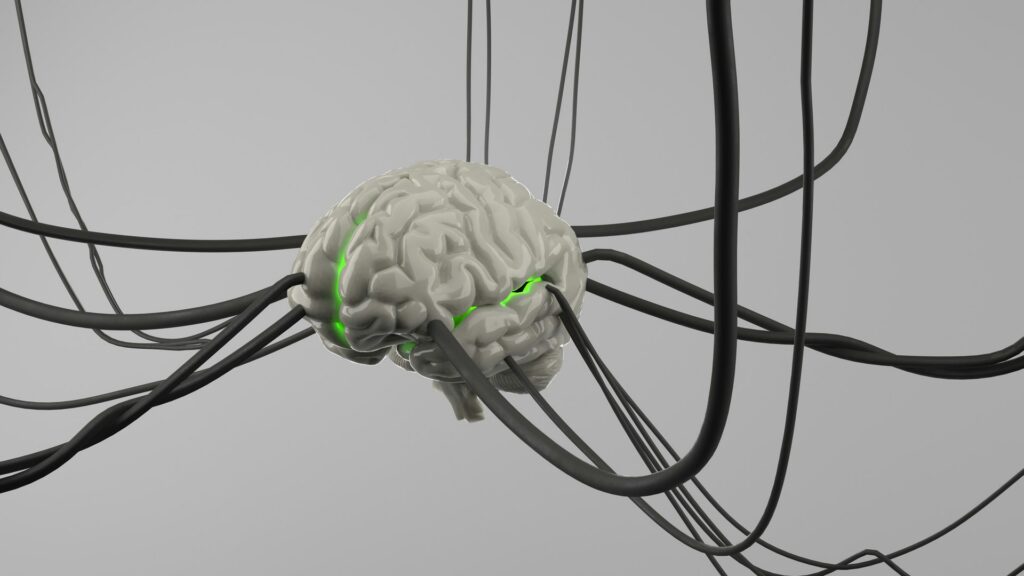
Do you ever wonder why cannabis affects your body the way it does? Or why THC makes you feel high, and CBD doesn’t, but it does take the edge off? Or why the same strain hits differently on different days? The answer starts with a biological system many people have never heard of.
The endocannabinoid system, or ECS, is the reason cannabis works on the human body at all. Understanding it can help you make better decisions about the products you use and what to expect from them.
What Is the Endocannabinoid System?
The endocannabinoid system is a complex cell-signaling network that runs throughout the human body. It was only discovered in the early 1990s, when researchers studying THC stumbled onto a previously unknown system of receptors built right into human biology. The discovery raised the question: why does the human body have receptors designed for a plant compound?
The answer is that it doesn’t. Those receptors exist because the body produces its own cannabis-like molecules called endocannabinoids, and the plant’s compounds happen to interact with the same system.
The ECS has three main components:
- Endocannabinoids: Molecules your body produces naturally on demand. The two most studied are anandamide, named after the Sanskrit word for bliss, and 2-AG (2-arachidonoylglycerol). These are your body’s built-in versions of cannabis compounds.
- Receptors: The targets those molecules bind to. The two primary receptors are CB1, concentrated in the brain and central nervous system, and CB2, found mainly in immune tissues and peripheral organs.
- Enzymes: The cleanup crew that breaks endocannabinoids down when they’ve done their job, preventing them from lingering longer than necessary.
Together, these three components work constantly in the background, helping the body maintain balance, or what scientists call homeostasis.
What Does the ECS Do?
The ECS plays a role in regulating a wide range of physiological processes. Research has linked it to mood, memory, sleep, pain perception, appetite, immune response, inflammation, stress regulation, and more. It’s not responsible for any one function exclusively. It acts more like a fine-tuning system, helping the body adjust and respond to what’s happening inside and around it.
Harvard Health describes the ECS as “essential and mysterious,” noting that it plays a critical role in learning and memory, and that the cannabis plant essentially works its effects by interacting with this ancient cellular machinery.
That framing captures the ECS well in the sense that it’s not a system built for cannabis, but cannabis is just surprisingly well-suited to interact with it.
The Role of CB1 and CB2 Receptors
CB1 and CB2 receptors are located in different areas and play different roles. Here are the most important differences and why they matter.
| CB1 Receptors | CB2 Receptors | |
|---|---|---|
| Location | Primarily in the brain and central nervous system | Primarily in immune cells, spleen, gastrointestinal tract, and peripheral nerves |
| Key areas | Memory, motor control, pain, and emotional regulation | Immune response, inflammation, and gut health |
| Effect of activation | Produces intoxication known as the cannabis “high” | Modulates inflammation and immune function without intoxication |
| Relevant cannabinoid | THC binds directly as a partial agonist | CBD, THC, and other cannabinoids interact here, though without producing intoxication |
| Why it matters | Explains psychoactive effects of THC | Explains non-intoxicating therapeutic interest in CBD and other cannabinoids |
How Do THC and CBD Interact With the ECS?
This is where it gets directly relevant to what you’re buying and using.
THC binds directly to CB1 receptors as a partial agonist. It fits into those receptors much like the body’s own endocannabinoids do, but with a stronger and longer-lasting effect. That direct binding is what produces intoxication, and it’s also why THC has such a pronounced effect on mood, appetite, and perception.
CBD works differently. It doesn’t bind directly to CB1 or CB2 receptors. Instead, it influences the ECS more indirectly. It may slow the breakdown of anandamide (the body’s naturally produced “bliss molecule”), allowing it to stay active longer, and it interacts with other receptor systems beyond the classic CB1/CB2 pathway. This is why CBD doesn’t produce a high but still appears to have an effect on how the body feels and functions.
Other cannabinoids (CBG, CBN, CBC, and others) may each interact with the ECS in their own ways, which is one of the reasons why the entourage effect theory holds appeal. Different compounds activating or modulating different parts of the same system may produce a more nuanced overall effect than any single compound on its own.
Why Does Cannabis Affect Everyone Differently?
You’ve probably noticed that even the same product can hit differently depending on the person, the day, or even the time of day. The ECS is a big part of the explanation. The ECS isn’t the same in everyone, which means that the receptor density, endocannabinoid tone, and enzyme activity vary from person to person based on genetics, lifestyle, stress levels, and other factors.
That individual variation is why dosing cannabis is rarely a one-size-fits-all situation, and why starting low and going slow remains the most consistently useful advice for both new and experienced users.
What All of This Means for You as a Cannabis Consumer
Here’s what to take away from all of this, and what to remember next time you’re buying cannabis products:
- THC’s effects are tied to CB1 activation: Products with higher THC content typically produce stronger intoxication because they’re binding more aggressively to CB1 receptors in the brain. This is also why tolerance builds over time, because the ECS adjusts.
- CBD’s effects work through a different pathway: CBD doesn’t compete with THC for the same cannabinoid receptor binding. Its influence is subtler and more indirect, which is why it doesn’t get you high but can still shape the overall experience.
- Terpenes can play a role, too: Terpenes like myrcene, limonene, and beta-caryophyllene are thought to interact with the ECS and related receptor systems alongside cannabinoids, potentially contributing to the distinct character of different strains and products, though research here is still developing.
- Your ECS is unique: What works well for someone else may not be the right fit for you. Paying attention to how your body responds to different cannabinoid ratios, formats, and doses is the most reliable way to find what works.
Start Your Cannabis Journey at The Artist Tree
The more you understand how your body interacts with cannabis, the easier it is to choose products that will give you what you’re looking for. At The Artist Tree, our guides are trained to go beyond the label and help you think through cannabinoid ratios, terpene profiles, and formats in terms of how they’re likely to interact with your system.
Stop by your nearest location or browse our menu online to explore what we offer, and let us help you find something that makes sense for you.